
How to Do a Green Audit of Your Home With Your Kids (A Simple but Fun Guide for Families)
A green audit might sound like something complicated, but it’s a simple, hands-on way to teach your kids about sustainability using something they already know well: your home! It turns big ideas like climate change and eco-friendly living into small, doable actions your family can take together.
If your kids have ever asked, “How can I help the planet?”, this is a great place to start.
But why is this important?
Getting kids involved in sustainability early helps them feel empowered instead of overwhelmed, build responsibility and awareness and see how small actions make a real difference in their lives and the world!
For parents, it’s also a way to start meaningful conversations without it feeling too heavy, build everyday habits as a family, and turn learning into something active and engaging for everyone.
What Is a Green Audit?
A green audit is just a way of looking at how your home uses energy, water, materials (like food and packaging) and finding simple ways to reduce waste and make more eco-friendly choices.
For kids, you can frame it like this:
“We’re going to become eco detectives and find ways to help our home be kinder to the planet.”
Turning it into a fun activity keeps kids engaged while they’re learning. We don’t need to be perfect, this activity is about awareness, not doing everything “right.” Here’s how we’re going to do it:
Step 1: Turn It Into a Game
The secret to making this work is to not treat it like a chore. Instead, make it fun!
Give your child a clipboard or notebook
Create a simple checklist
Let them be the “official eco inspector” (badge optional but highly encouraged)
Use stickers, stars, or points for each discovery
You can even set a mission like: “Let’s find 5 ways we can make our home more eco-friendly today.”
Step 2: Take it Room-by-Room
Walk through your home together and ask simple, kid-friendly questions.
Example: The Kitchen
Are we throwing away food we could save?
Do we recycle everything we can?
Is there a lot of packaging we could reduce?
If you have room for improvement (like we all do) you could suggest starting a “leftovers night”, using reusable containers, or talk about composting (if available).
More questions to ask:
Do we turn off the tap while brushing teeth?
How long are our showers?
Are lights left on when no one is in the room?
Do we re-wear clothes before washing
Are electronics left on or plugged in?
Can we use natural light instead?
Step 3: Pick 3 Changes to Start With
You don’t need to fix everything at once! That’s a path to overwhelming yourself. Instead, ask your kids which changes they think you should try first. Let them choose 2-3 simple actions, like:
Turning off lights every time they leave a room
Taking shorter showers
Using reusable snack containers
This gives them ownership and makes it much more likely to stick!
Step 4: Make It Stick
Consistency is always the tricky part, but a few small strategies can help:
Track progress with a chart or checklist
Celebrate small wins (“We remembered all week!”)
Let your child remind you (they’ll love this role!)
The goal is building awareness and habits over time, not perfection.
Step 5: Take It Further With a Creative Project
If your kids enjoy the audit, you can extend the learning:
Draw or design an “eco-friendly dream home”
Build a model house using recycled materials
Come up with inventions that could help the planet
This is where sustainability meets creativity and where kids really start to connect ideas to action.
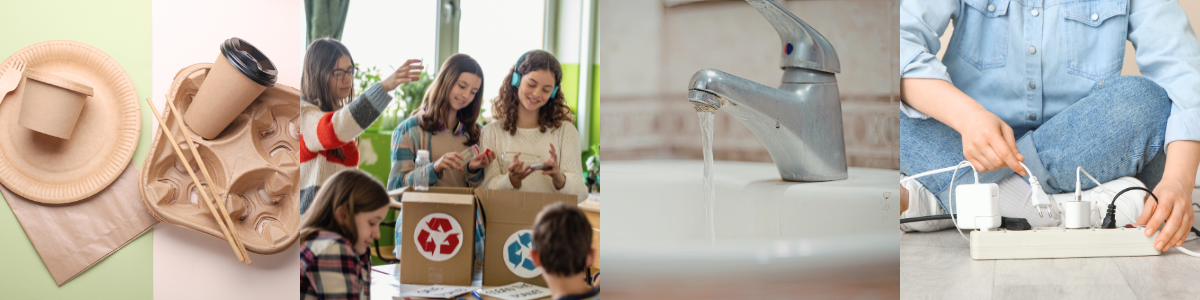
A green audit doesn’t require special tools, a big time commitment, or a perfectly eco-friendly home.
It’s just about paying attention and making small changes together. And most importantly, it helps kids see that they can make a difference right where they are!
Want to Make It Even Easier?
Download our free Green Audit Checklist for Kids to turn this into a fun, guided activity your child can lead.
And if your child loves hands-on learning like this, we explore sustainability, design, and creative problem-solving in our programs at Petit Architect, where kids turn big ideas into real-world designs.