
7 Signs Your Child Might Be a Future Architect
Does your kid rearrange their bedroom furniture "just to see how it feels"? Have they ever burst into tears over a Lego structure that wasn't structurally sound? Do they critique the layout of every grocery store you walk into?
You might have a future architect on your hands!
The skills that make a great architect start showing up way before anyone hands a kid a drafting pencil. And if your child is already doing some of the things on this list, they've got something really cool brewing!
Here's what to look for (and why we think it’s a big deal):
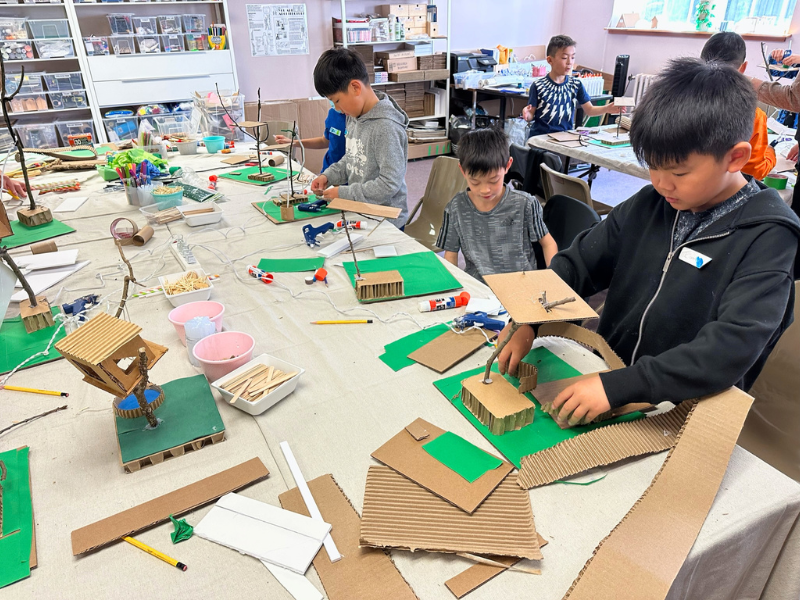
1. They Build Everything (And Then Rebuild It Better)
Blocks, blanket forts, cardboard boxes, LEGO…it doesn't matter what it is. Your kid builds something, stares at it, decides it's not quite right, and starts over with a better plan.
Why that's worth getting excited about: That back-and-forth process is called design thinking. It's the same instinct professional architects use every single day and it teaches kids that getting it wrong the first time is just part of figuring it out. That lesson is genuinely hard for most adults to learn, and your child is already doing it for fun!
2. They Notice Buildings Like Other Kids Notice Toys
You're driving somewhere and out of nowhere: "Why is that building shaped like that?" or "How come that house has such tiny windows?" They're noticing things you've driven past a hundred times and never thought about.
Why that's worth getting excited about: That kind of curiosity, noticing the world and asking why, is huge! It's how scientists think, how designers think, how problem-solvers think, etc. Kids who question the stuff most people tune out grow up to be the ones who actually change things.
3. They've Definitely Drawn a Floor Plan of Their Dream Room (Or an Entire Imaginary City)
Maybe it's their bedroom layout or maybe it's a treehouse with three levels and a zip line. Maybe they've been sketching the same fictional city for a month and it now has neighbourhoods and a transit system… If your kid loves mapping out spaces, how rooms connect, where things go, how people move through them, that's a great skill showing up early!
Why that's worth getting excited about: Most people can't naturally think in top-down views or visualize how a space will actually feel before it's built. Kids who can do this instinctively tend to be strong in math and visual problem-solving and they don't even realize they're doing something special.
4. They Have Opinions About Spaces
"This room feels weird." "Why would anyone put the bathroom there?" "Our kitchen would be so much better if it was just a little bigger."
If your child seems unusually sensitive to how a space makes them feel (whether somewhere feels cozy or chaotic) that's them picking up on something a lot of people never consciously notice.
Why that's worth getting excited about: Understanding how spaces affect people is quite literally what architects spend years studying. Your child is already doing it naturally! That's called empathy for design and it's a tough thing to teach.
5. They're Creative AND Kind of a Rule-Follower
This one surprises parents! Future architects often seem like two different kids at once: super creative and imaginative but also really into understanding exactly how things work. They want the rules before they bend them.
Why that's worth getting excited about: Architecture lives right at the intersection of art and logic. A lot of kids who love both feel like they don't quite fit the "artsy" box or the "math-y" box and architecture is one of those rare paths where being both is kind of the whole point. That combination is a pretty cool superpower!
6. They Play "What If" With Everything
"What if we built houses underground?" "What if every bridge looked a little different?" "What if the whole school was outside?"
If your child is constantly reimagining how things could be built or designed differently (even just in play) they're doing something really sophisticated without knowing it.
Why that's worth getting excited about: Imagining alternatives to the way things are is where every good idea starts. Kids who do this naturally often grow up to be incredible problem-solvers, designers, and innovators, in architecture and a whole lot of other fields too.
7. They Need to Know How Things Stay Up
Not just what something looks like but why it doesn't fall over. Why can you build a skyscraper without it tipping? What holds a bridge up? How does an arch work?
If your kid is asking these kinds of structural "but HOW though?" questions, they're combining curiosity with a need to understand the system.
Why that's worth getting excited about: Kids who learn through building and doing, who need to see how something works before it clicks, often thrive in architecture because it makes abstract concepts (physics, math, geometry) suddenly make sense in real life. It's one of the best hands-on learning paths out there!
Why This Matters (For Parents Who Are Thinking Ahead)
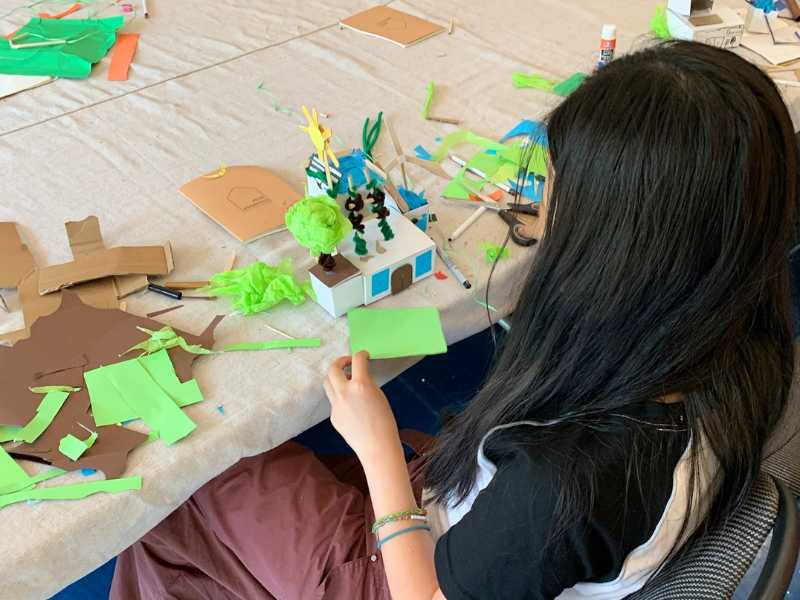
These instincts are amazing but they can grow faster with the right fuel. Spatial thinking, creative problem-solving, design confidence all develops most quickly between ages 6 and 14. That window is worth paying attention to!
Kids who get early exposure to architectural thinking tend to:
Do better in math and science - because abstract stuff makes sense visually
Communicate more clearly - because design teaches you to explain ideas
Handle failure better - because in design, iteration is the process
Feel confident being creative - which carries into every subject, every project, every job they'll ever have
And in Canada especially, where the demand for creative thinkers in tech, engineering, and design is only growing, giving your kid this foundation early is one of the best things you can do for them.
Not seeing your kid in this list? Don’t stress! These aren't traits you're either born with or not, they're skills, and like any skill they grow with the right experiences. That's literally why we do what we do. Our programs are designed to meet kids wherever they're starting from and build up their spatial thinking, creative confidence, and design instincts from the ground up. You don't need a mini Frank Gehry at home to get started (though that would be pretty cool)! You just need a kid who's curious about something and we'll take it from there.
So What Do You Do Next?
You don't wait for high school, that's for sure! Architecture is barely taught in Canadian schools before Grade 11 (if at all), which means kids who get early exposure to it are way ahead. Whether your child ends up as an architect, a game designer, an engineer, or something nobody's invented yet, the thinking skills they build now travel with them throughout their whole lives.
Here's where to start:
Check out our programs - Hands-on architecture education designed specifically for kids. Fun, age-appropriate, and different from anything they're doing in school.
Browse our downloadables store - Design challenges, floor plan activities, building projects, and more. All resources your kid can dig into at home, at their own pace. Great for the one who can't stop building even when class isn't in session.
Your kid is already telling you something about who they are. We're here to help them run with it!
Got a little builder or big thinker at home? Share this with a parent who'd totally recognize their kid in this list!